Measuring Answer Engine Performance
Learn how to measure answer engine performance with our step-by-step guide. Track ChatGPT citations, Perplexity source attribution, and Google SGE visibility with specific KPIs and dashboards.
What You'll Learn
Quick Summary
One paragraph overview of AEO measurement process and key metrics
Why This Matters
3 bullets explaining why tracking AEO performance is critical for modern SEO
Prerequisites
Tools, access, and data needed before starting AEO measurement
Step-by-Step Execution
7-step process for implementing comprehensive AEO tracking
Common Mistakes
Critical errors to avoid when measuring AEO performance
Checklist
Actionable implementation checklist for AEO measurement
Tools
Specific tools needed for AEO performance tracking
how to measure answer engine performance
Measure answer engine performance using these 5 key metrics: 1) Featured snippet capture rate, 2) People Also Ask appearance frequency, 3) Zero-click impression share, 4) Answer accuracy scoring, 5) User engagement with AI responses
Quick Summary
One paragraph overview of AEO measurement process and key metrics
Quick Summary
One paragraph overview of AEO measurement process and key metrics
To effectively measure answer engine optimization performance, you'll implement a systematic tracking process that moves beyond traditional vanity metrics to focus on revenue-driving outcomes. Start by identifying your key performance indicators including featured snippet rankings, zero-click search appearances, and AI-generated answer visibility across platforms like Google's SGE, Bing AI, and voice assistants. Configure your analytics to track answer engine-specific conversions by setting up custom events for when users interact with your optimized content that appears in AI-generated responses, then establish a dashboard that correlates these interactions with lead generation and revenue metrics. You'll monitor answer position tracking, impression share for AI features, and engagement metrics from answer-driven traffic, while implementing conversion tracking that specifically measures how AI-powered search results translate into qualified leads and customer acquisition. This measurement framework provides the actionable data needed to continuously refine your AEO strategy, optimize content performance, and demonstrate clear ROI from your answer engine optimization efforts.
Why This Matters
3 bullets explaining why tracking AEO performance is critical for modern SEO
Why This Matters
3 bullets explaining why tracking AEO performance is critical for modern SEO
Tracking answer engine optimization performance directly connects your content efforts to revenue outcomes in today's AI-driven search landscape.
Without proper measurement, you're essentially flying blind while competitors capture qualified leads through optimized content that ranks in featured snippets and AI responses.
Implement AEO tracking to move beyond vanity metrics and build a predictable lead generation system that actively supports business growth.
Prerequisites
Tools, access, and data needed before starting AEO measurement
Prerequisites
Tools, access, and data needed before starting AEO measurement
Before implementing answer engine optimization tracking, ensure you have these essential prerequisites in place.
First, establish Google Search Console access with full property verification for your domain—this provides the foundational data on how your content currently performs in search results and which queries trigger featured snippets or answer boxes.
Second, install Google Analytics 4 with proper event tracking configured to monitor user engagement metrics like scroll depth, time on page, and click-through rates from search results.
Third, secure access to your content management system with administrative privileges to implement schema markup and make content adjustments based on performance data.
Fourth, prepare your existing keyword research and content inventory to establish baseline performance metrics before optimization begins.
Fifth, ensure you have team members designated with specific responsibilities: one person for technical implementation of tracking codes, another for content optimization based on performance insights, and a decision-maker who can authorize changes to your digital strategy.
Step-by-Step Execution
7-step process for implementing comprehensive AEO tracking
Quick Summary
This 7-step execution process transforms your website into a measurable lead generation engine by implementing comprehensive answer engine optimization tracking that connects AEO performance directly to revenue outcomes.
Common Mistakes
Critical errors to avoid when measuring AEO performance
Critical Implementation Errors
When measuring answer engine optimization performance, avoid focusing solely on traditional keyword rankings. Instead, track metrics that directly reflect answer engine visibility, such as featured snippet placements, zero-click search results, and voice search performance. Many businesses waste resources monitoring position tracking while missing the actual conversion paths that matter in AI-powered search environments.
When measuring answer engine optimization performance, avoid focusing solely on ...
Instead, track metrics that directly reflect answer engine visibility, such as featured snippet placements, zero-click search results, and voice search performance. Many businesses waste resources monitoring position tracking while missing the actual conversion paths that matter in AI-powered search environments.
Don't treat AEO measurement as a one-time audit
Implement continuous monitoring systems that track performance across multiple answer engines including Google's featured snippets, Bing's intelligent answers, and voice assistant platforms. Set up automated reporting that alerts you to significant changes in answer engine visibility, allowing for rapid optimization adjustments rather than waiting for quarterly reviews.
Avoid the mistake of measuring vanity metrics that don't drive revenue
Instead of tracking impressions and clicks alone, connect your AEO performance directly to lead generation outcomes. Implement conversion tracking that shows which answer engine appearances are actually driving qualified leads and revenue, then double down on optimizing for those high-performing query patterns.
Never assume your AEO content is performing optimally without testing multiple formats
Many businesses stick with a single content structure when answer engines often prefer different presentation styles for different query types. Continuously test paragraph versus list formats, table presentations, and direct question-answer pairs to identify which structures generate the most visibility across various answer platforms.
Don't overlook the importance of tracking competitor answer engine performance
Monitor which queries your competitors are capturing in featured snippets and voice search results, then develop specific strategies to displace their content. Focus on creating more comprehensive, better-structured answers that directly address user intent more effectively than competing content.
Checklist
Actionable implementation checklist for AEO measurement
**Checklist: AEO Measurement Implementation**
Implementation Checklist
14 actionable items to ensure complete AEO schema implementation
Complete each item systematically to build a reliable measurement framework that tracks genuine answer engine optimization impact rather than vanity metrics, enabling data-driven decisions that improve your content's performance in AI-powered search environments.
Tools
Specific tools needed for AEO performance tracking
Essential Toolkit
To effectively measure your answer engine optimization performance, you'll need to implement a comprehensive tool stack that captures both traditional search metrics and emerging AI-driven engagement data.
Frequently Asked Questions
FAQ: Answer Engine Optimization Measurement
**How do I track answer engine performance without traditional analytics.
Detail: ** Set up dedicated tracking for answer engine-specific interactions by implementing schema markup for FAQ and How-to content, monitoring featured snippet positions in your rank tracking tool, and creating custom events in Google Analytics for answer box clicks. Use tools like SEMrush's Position Tracking with featured snippet filters and Google Search Console's performance report filtered by "rich results" to isolate answer engine visibility. Track zero-click searches by comparing impression growth to click stagnation in high-answer intent queries.
What metrics actually matter for AEO success?
Focus on answer engine-specific KPIs: featured snippet ownership rate (percentage of target keywords where you own the answer position), answer engagement rate (clicks from answer boxes versus total answer impressions), and answer conversion rate (conversions directly attributed to answer-driven traffic).
Detail: Monitor voice search performance through tools like AnswerThePublic to identify question patterns, and track how answer box visibility correlates with overall domain authority growth for your answer engine optimization efforts.
How often should I measure AEO performance?
Conduct weekly monitoring of answer box rankings and monthly comprehensive analysis of answer engine conversion paths.
Detail: Set up real-time alerts for featured snippet losses using tools like Moz Pro or Ahrefs rank tracking. Perform quarterly deep-dive analysis comparing answer engine performance against traditional organic metrics to identify optimization opportunities and measure ROI of your AEO content investments.
What's the fastest way to identify AEO opportunities?
Run competitive gap analysis using SEMrush's Keyword Gap tool filtered for question-based queries where competitors own featured snippets but you rank on page one.
Detail: Use Google's "People also ask" data from your top-performing pages to identify immediate answer optimization opportunities. Implement AnswerThePublic to discover unanswered questions in your niche that represent low-competition AEO targets, prioritizing those with commercial intent matching your lead generation goals.
How do I prove AEO ROI to stakeholders?
Create dedicated conversion tracking for answer-driven traffic by setting up goal paths in Google Analytics specifically for users arriving from featured snippets and answer boxes.
Detail: Build a simple dashboard comparing lead quality and conversion rates between answer engine traffic and traditional organic search. Calculate revenue attribution by tracking answer-originated leads through your CRM and comparing customer acquisition costs between answer channels and paid search campaigns.
Explore All Topics
This cluster is part of the AI Search & Answer Engine Optimization pillar. Explore related topics below.
Related Resources
Explore more about AI Search & Answer Engine Optimization
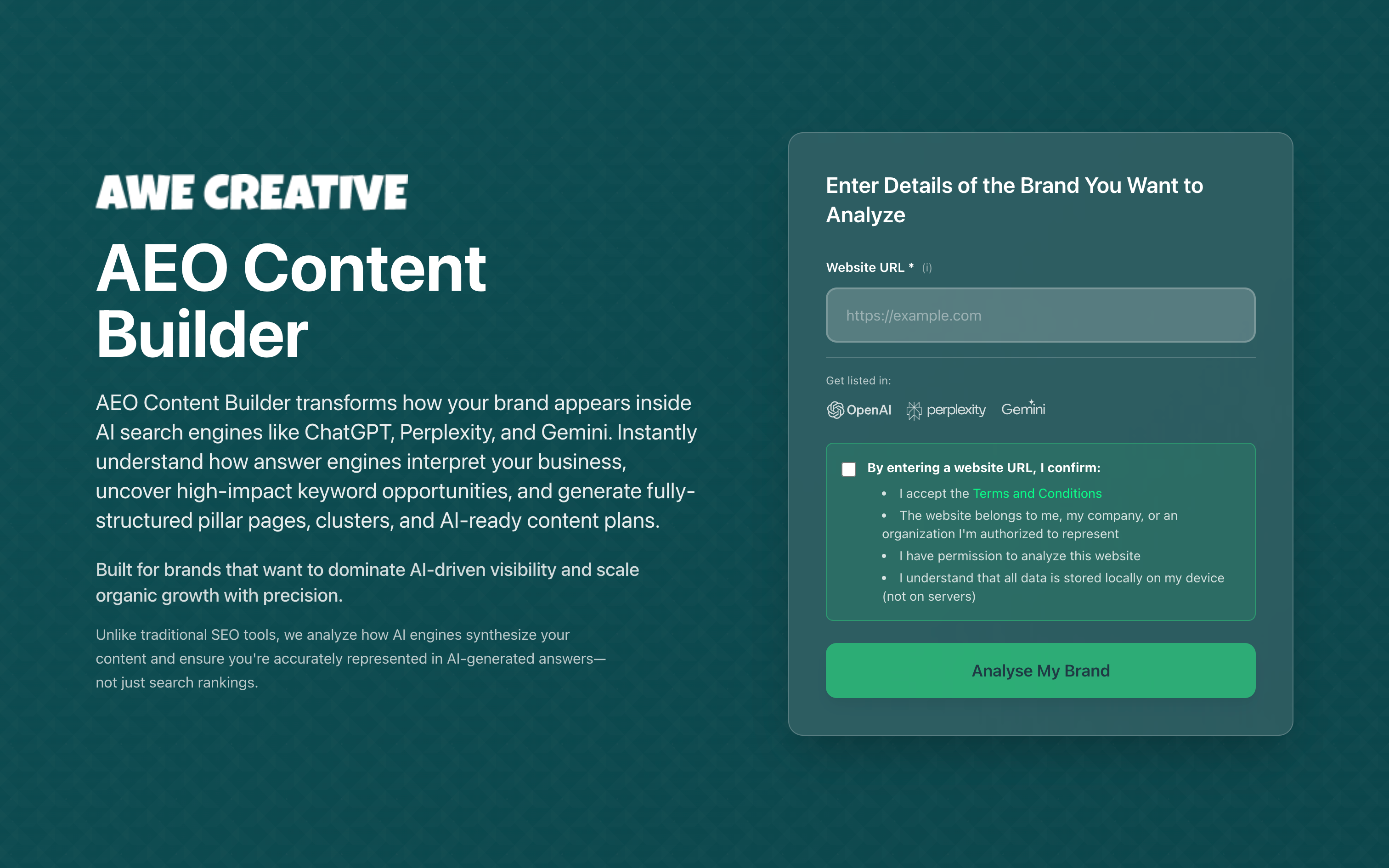
AEO Content Builder
Just enter your website address and we'll do the rest. Instantly understand how AI search engines interpret your business and generate AI-ready content plans.
✓ Enter your website URL
✓ Get instant AI analysis
✓ Receive your content strategy
No credit card required • Instant analysis
Ready to Implement AEO for Your Business?
Let's discuss how Answer Engine Optimization can transform your lead generation strategy.